

THE BLUE WHALE
Balaenoptera musculus (muscled) & Baleen whale (mysticetes)
Length: 22 to 33 m Weight: 75 to 130 tons.
We are fortunate to welcome the giant of the seas, the largest mammal to have ever existed on the planet, the blue whale. It is the only one to give birth to 2,000 kg babies.
Appearance and surface behavior: Contrary to its name, the blue whale is more silver-gray. It will come to the surface for 6 to 20 breaths before diving for 5 to 15 minutes. You will see a tall (10 m) and narrow blow. The dorsal fin, which is relatively small, is visible only during the last breaths. Some individuals will show their tail on the final dive.
Frequency of this species at Forillon: Variable frequency in recent years. Sometimes abundant, other times rare. Possibly related to the presence of their preferred food, krill.
THE HUMPBACK WHALE
Balaenoptera megaptera (huge wings) & Baleen whale (mysticetes)
Length: 13 to 16 m Weight: 25 to 30 tons
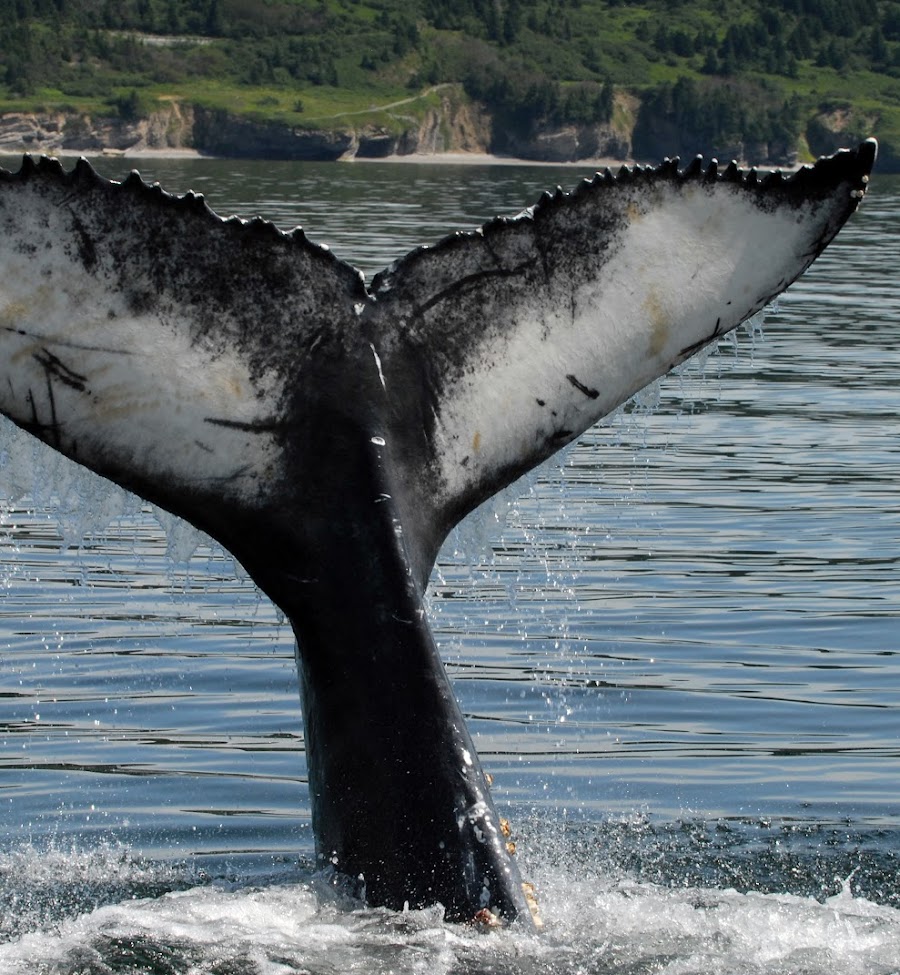
Smaller than the blue whale, but just as spectacular, the humpback whale is also a frequent visitor to the Forillon coast. Like our fingerprints, the underside of the humpback whale's tail is unique and has helped identify individuals and populations
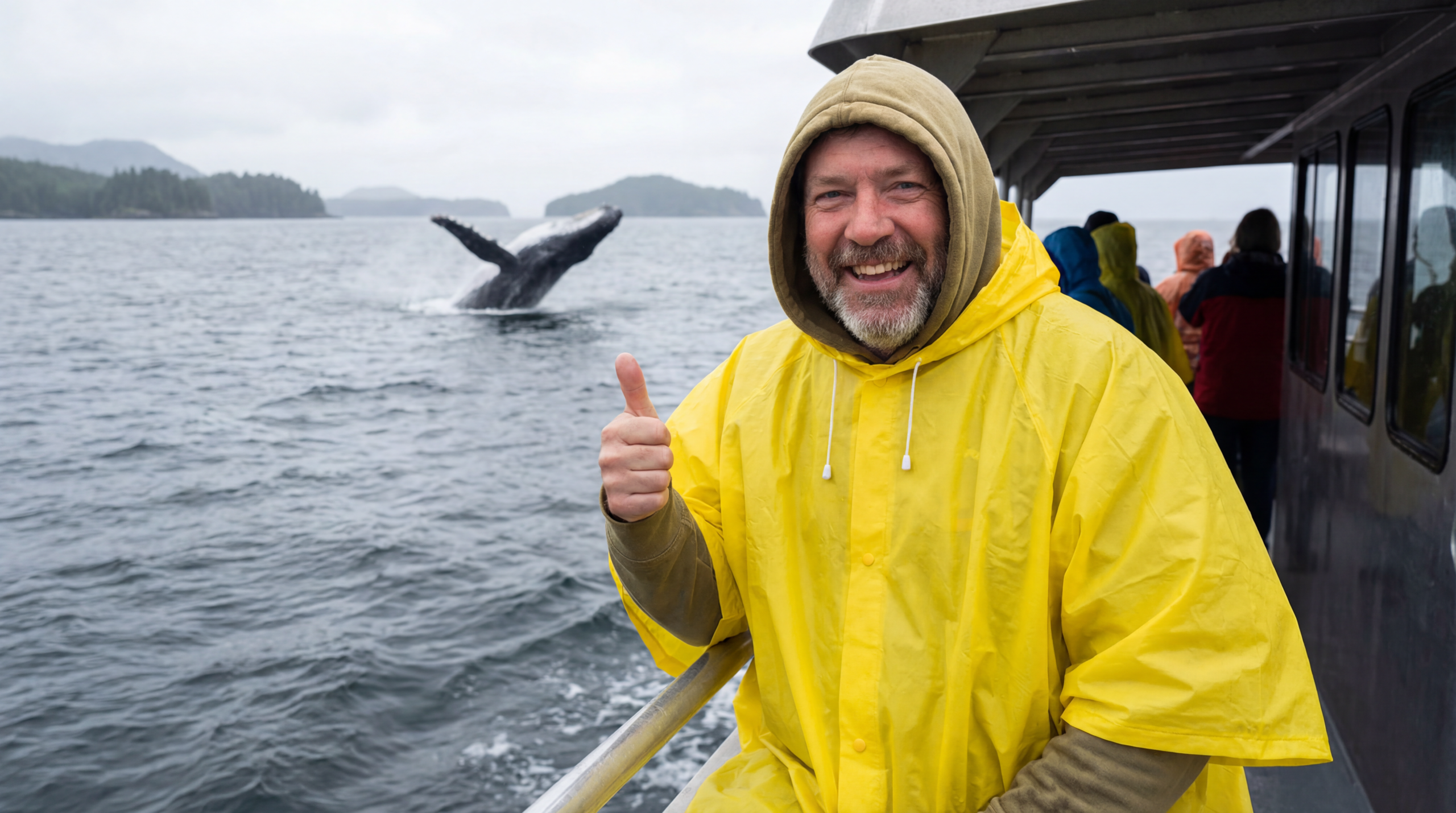
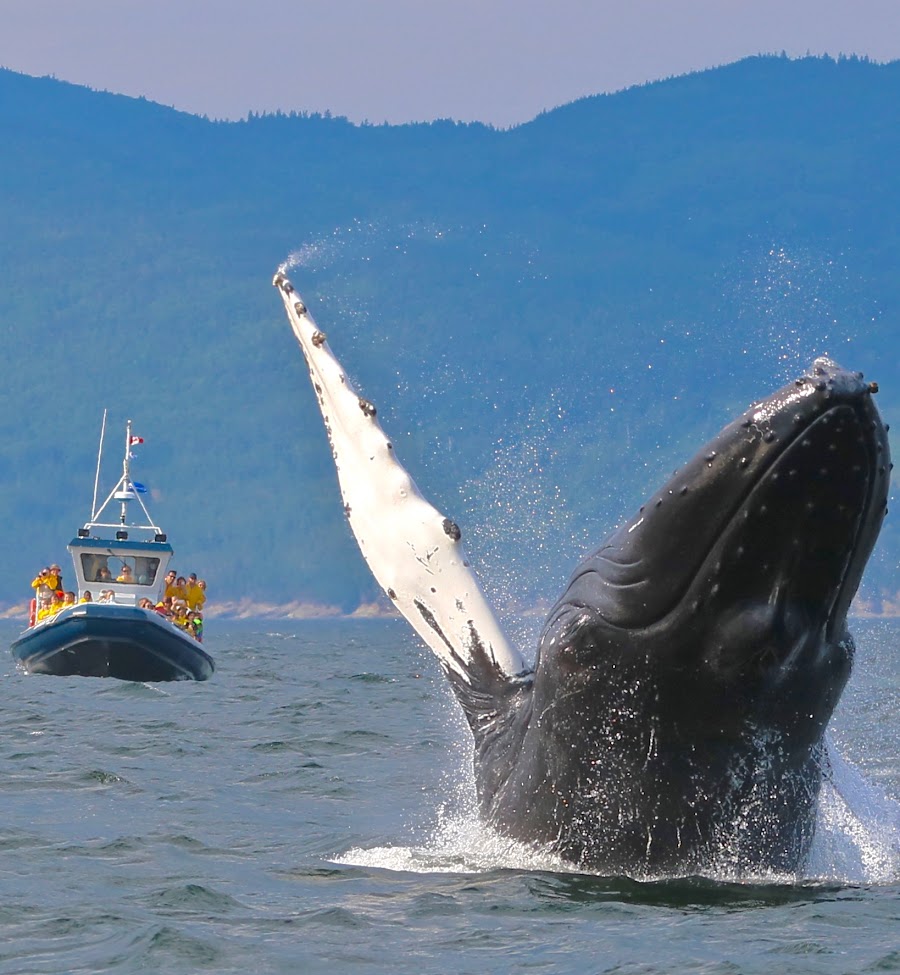
Appearance and surface behavior: It is black on the dorsal side and white and black on the belly. Its name refers to the hump on which the dorsal fin appears to be placed. The blow, about 3 m high, is mushroom-shaped. The humpback whale is certainly the whale that offers the best show. You can see it leap completely out of the water (breaching) and slap the water surface with its tail fin (lobtailing).
Frequency of this species at Forillon: Regular sightings from June to October.
THE FIN WHALE
Balaenoptera physalus & Baleen whale (mysticetes)
Length: 22 to 24 m Weight: 40 to 50 tons
This species is one of the fastest, reaching speeds of 30 knots (55 km per hour)
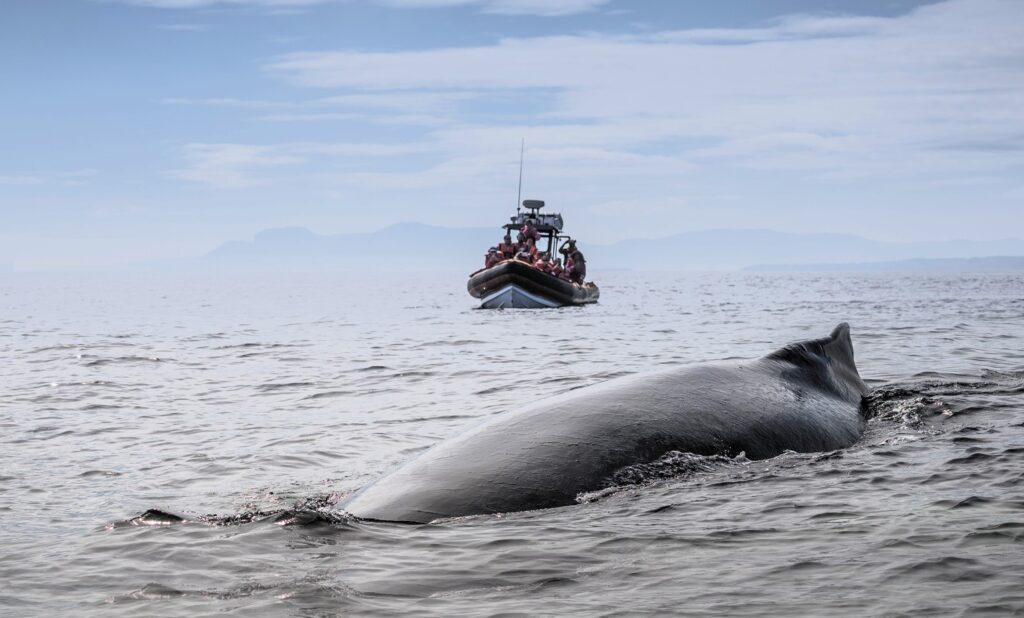
Appearance and surface behavior: Gray with a white belly. On average, the fin whale will come up to breathe every 4 minutes, but it can stay underwater for up to 20 minutes. You will first see the blowhole at the surface followed by the dorsal fin on its last appearance, the back will be more arched. It will not show its tail on the final dive. Its blow, about 5 m high, is shaped like an inverted V.
Frequency of this species at Forillon: Regularly observed from June to October. Often in groups of several individuals.
THE MINKE WHALE
Balaenoptera acutorostrata (pointed snout) & Baleen whale (mysticetes)
Length: 6 to 9 m Weight: 6 to 8 tons
This is the most commonly observed cetacean in Gaspé Bay and is often spotted along the coast.
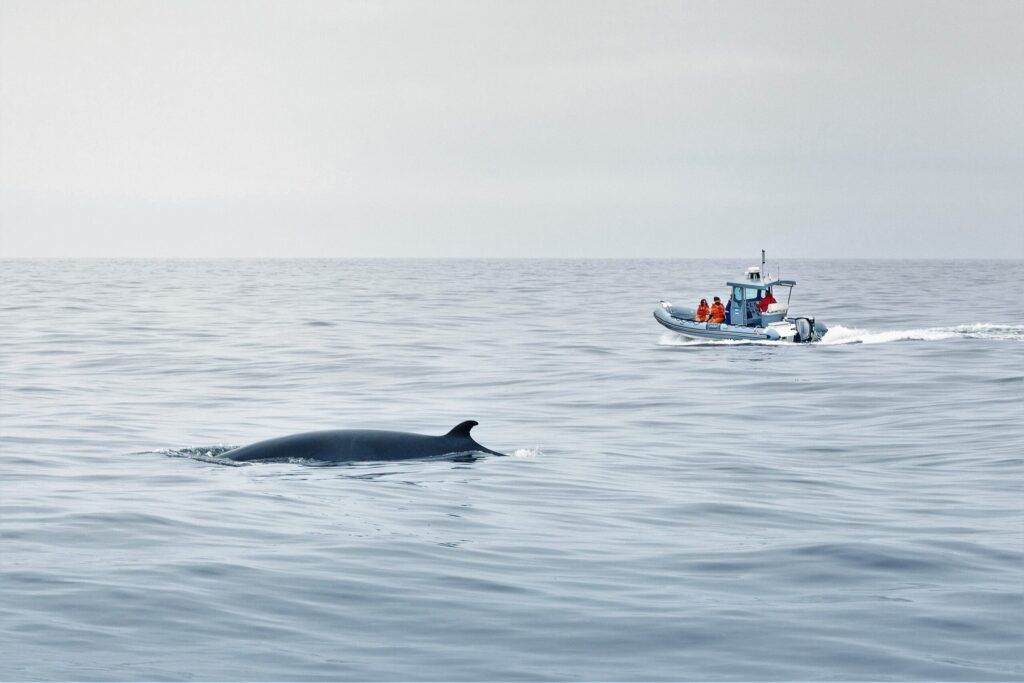
Appearance and surface behavior: Very dark with a rounded back. You will see the blowhole and dorsal fin at the same time when it comes to the surface on average every 2 to 10 minutes. It can then stay underwater for 20 minutes. The blow at the surface will be barely visible. Sometimes this cetacean can be seen leaping completely out of the water.
Frequency of this species at Forillon: Present near the coast from June to October.
THE HARBOR PORPOISE
Phocoena phocoena & Toothed whale (odontocetes)
Length: 1.5 to 2 m Weight: About 50 kg
The smallest of the whales, also called the common porpoise, it is very difficult to spot and photograph.
Appearance and surface behavior: The harbor porpoise is usually alone or in pairs, but can sometimes be found in small groups. It dives for only a few minutes.
Frequency of this species at Forillon: Observed from June to October.
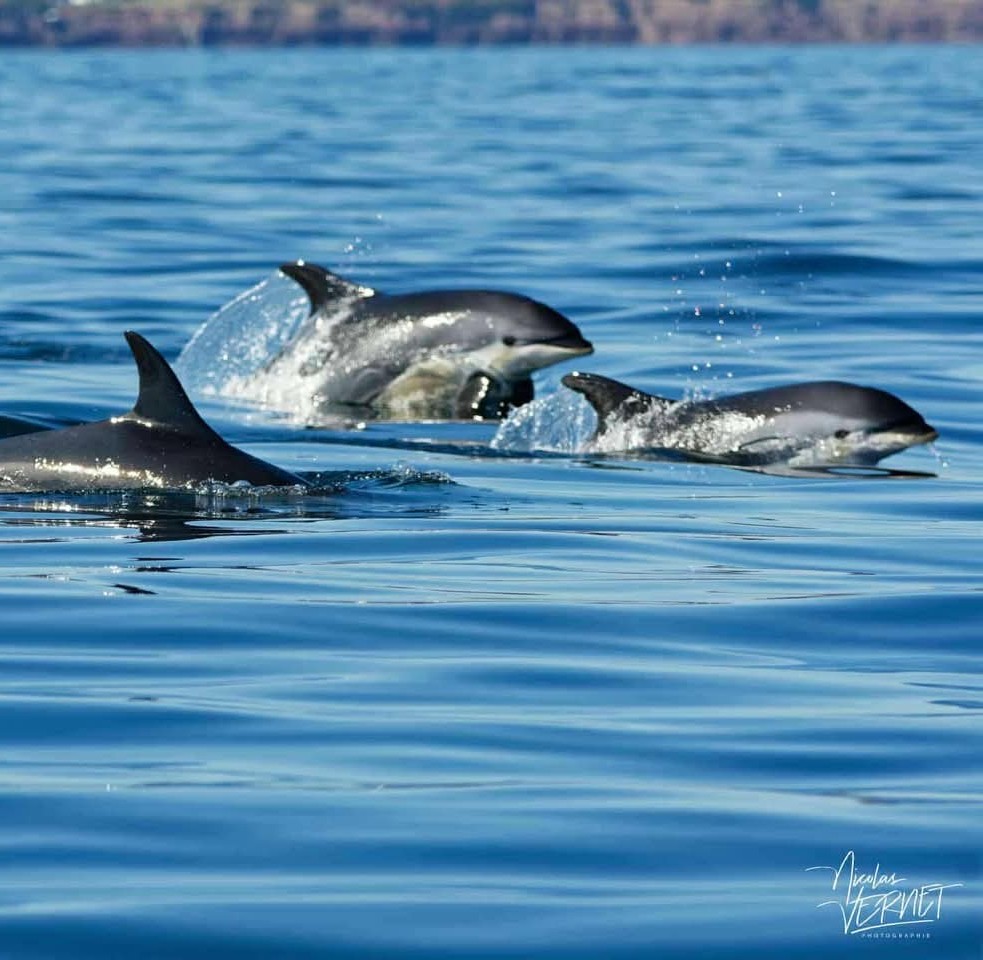
THE WHITE-SIDED DOLPHIN
Lagenorhynchus acutus & Toothed whale (odontocetes)
Length: 2 to 2.7 m Weight: 150 to 200 kg
Although we associate dolphins with tropical waters, this species prefers temperatures below 12 degrees Celsius.
Appearance and surface behavior: A species that does not go unnoticed during its visits, as dolphins usually arrive in groups (several hundred individuals). You can then see the white line on the side that earned them the name white-sided.
Frequency of this species at Forillon: Observed from mid-July or early August until October.
Image Gallery
Discover the different marine species you can observe at Forillon. Each image offers you a fascinating glimpse of these magnificent marine creatures.
Impressive size
Whales are the largest living creatures. They can reach up to 30 meters long and weigh up to 200 tons.
Song of the seas
Whales produce complex songs that can travel thousands of kilometers, allowing them to communicate over impressive distances.
Incredible migration
Each year, some whale species travel thousands of kilometers during their migrations, journeying between their feeding grounds and breeding areas.
Testimonials from our visitors
Our customers share their experiences, hear what they think!
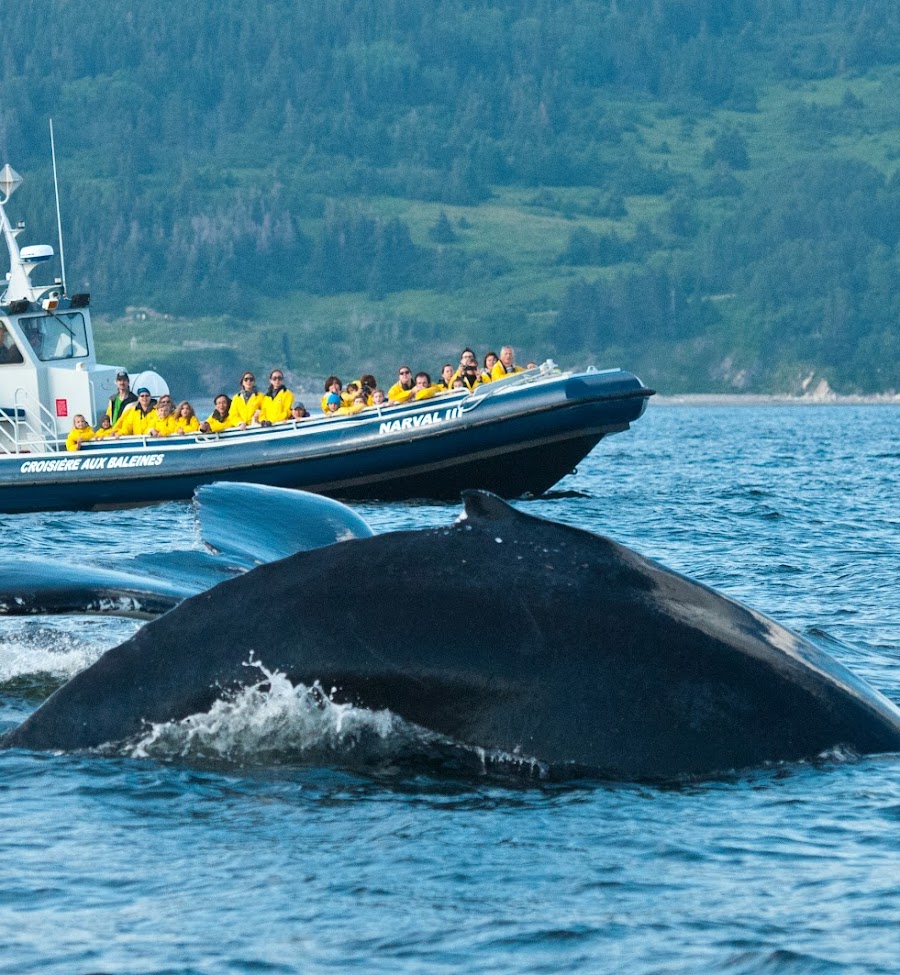
Trip in Gaspé Bay and the Gulf of St-Laurent for whale watching and other marine mammals. Very professional captain and naturalist. They are very respectful of marine wildlife and generous with their knowledge about the cetaceans that visit us during the summer season.
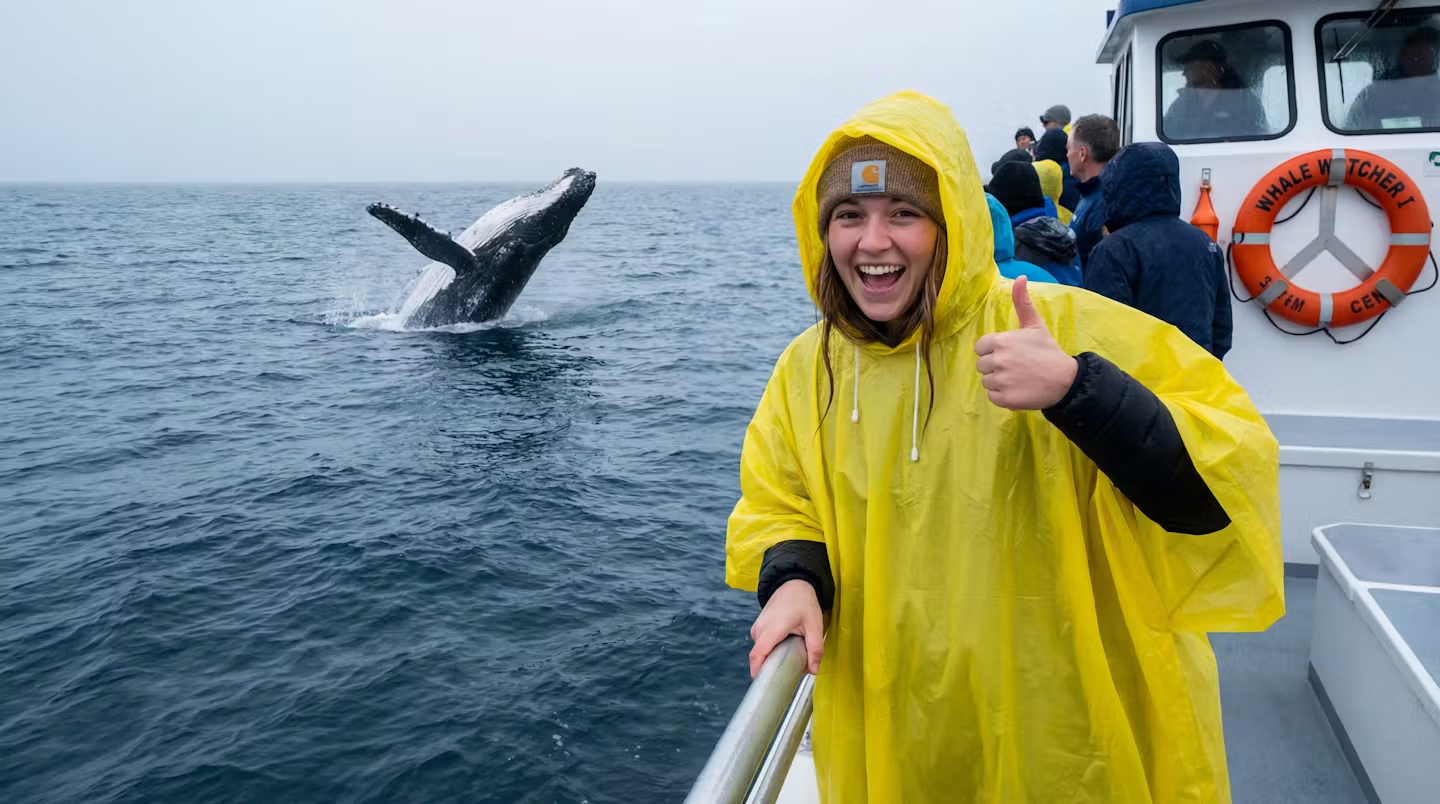
Nous étions un groupe de 10 et tout le monde a adoré l’expérience! Nous avons vu deux belles baleines à bosses, des marsouins et des phoques. Le capitaine sait nous amener à des places magnifiques. L’animation était super (merci Ariane) et l’accueil à la réception était chaleureux. Le tour est bien organisé et d’une durée de 2h30. Nous recommandons vivement, ça a certainement été un « highlight » de notre séjour en Gaspésie.🐋
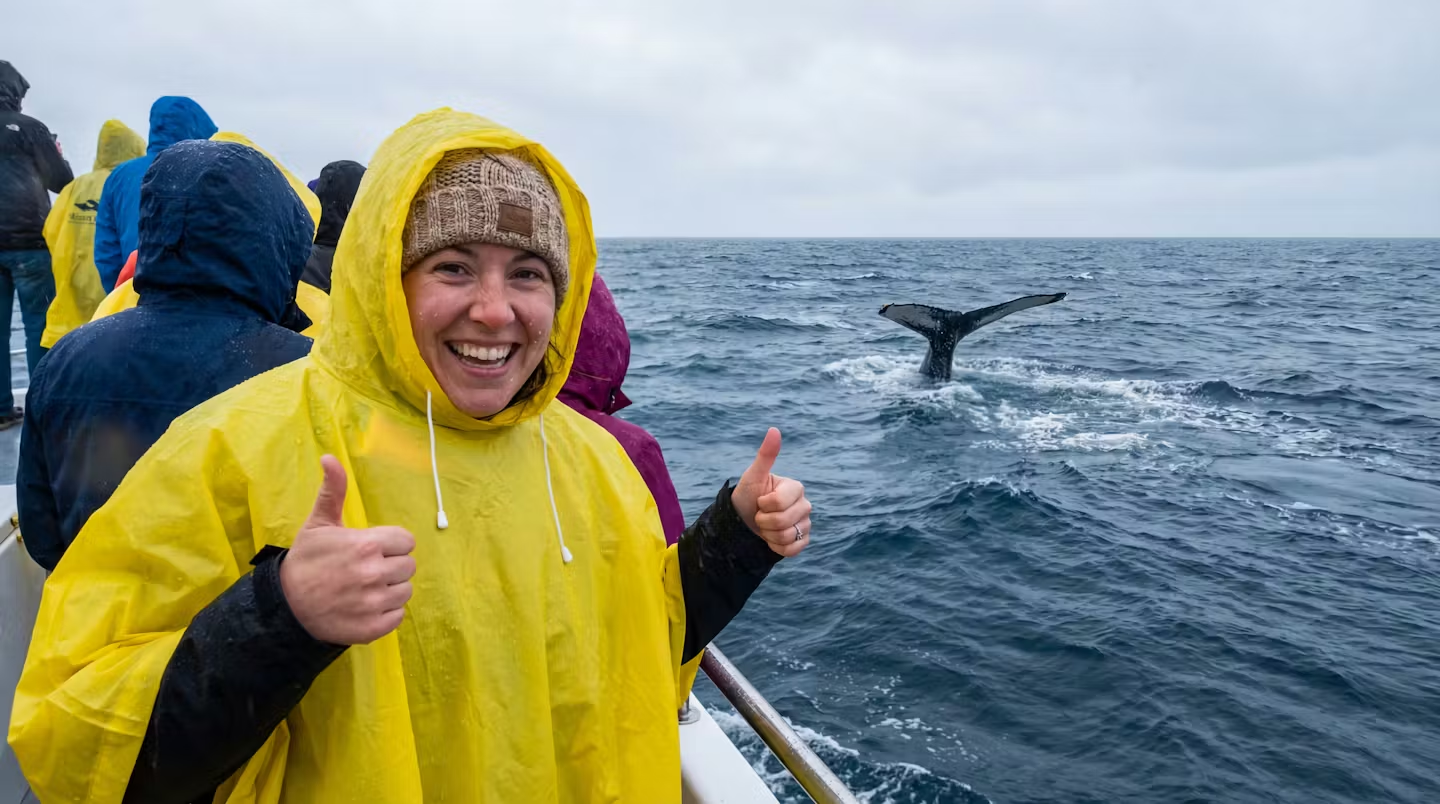
Franchement, c'était génial. Surtout le moment où la baleine à jaillit de l'eau au complet.
Puis la capitaine du Zodiac de 12 personne elle était super gentille et avait un excellent sens de l'humour.
En plus, elle connaissait vraiment bien son sujet et on voit que ça la passionne.
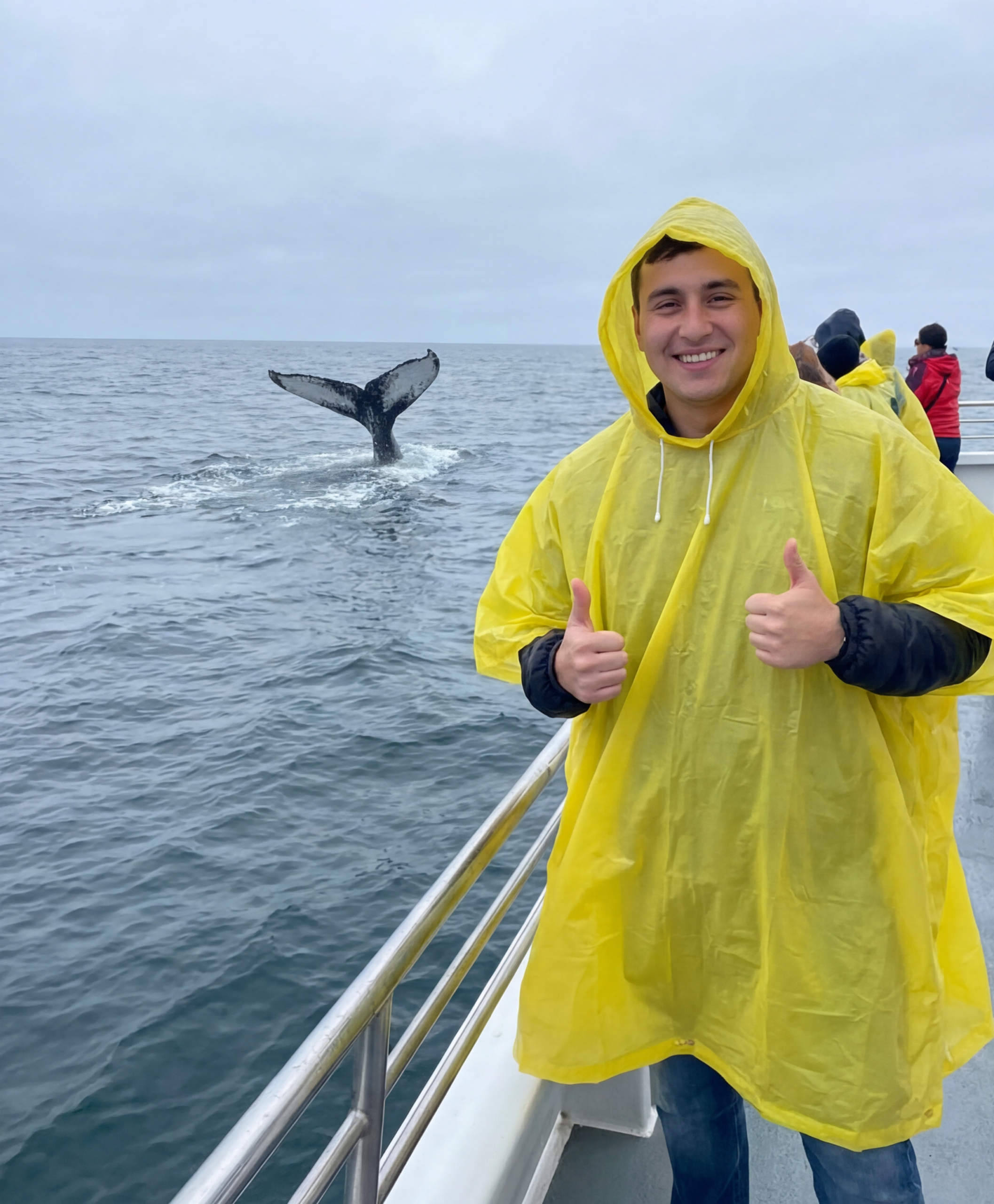
Vraiment une belle croisière sur le Rocher Le Vieux. Le capitaine était super sympathique. On a pu observer 2 baleines a plusieurs reprises et des phoques.